Going Back to Go Forward: The Turkish-Americans Betting on the Old Country
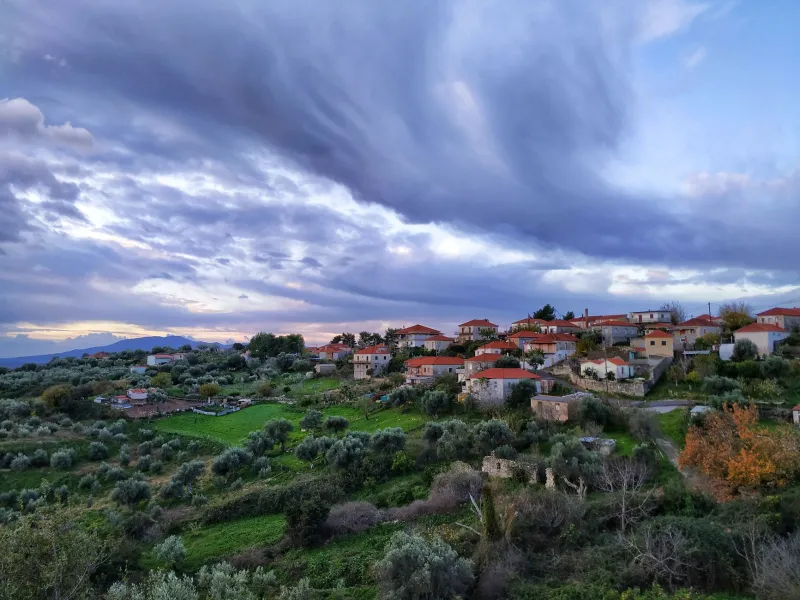
The olive grove had been in Selin's family for four generations. Her grandparents tended it in a small village outside Ayvalık, on Turkey's Aegean coast. Her parents left for Ankara, then eventually for New Jersey, and the grove passed to distant relatives who didn't quite know what to do with it.
For years, Selin — who grew up in Hoboken and built a career in food marketing — thought of the grove as a story her mother told. A memory. A thing that used to be.
Then, at 38, she bought it back.
"I kept waiting for it to feel crazy," she says, sitting in her apartment in Jersey City, a spreadsheet of Turkish import regulations open on her laptop. "It never did. It felt like the most logical thing I'd ever done."
Selin is not alone. Across the Turkish-American community, something is quietly stirring — a growing current of people directing capital, energy, and sometimes entire life plans back toward Turkey. Not because they're giving up on America, but because they've found a way to hold both places at once.
The Numbers Behind the Feeling
This isn't purely anecdotal. Turkish real estate data shows a consistent uptick in foreign nationals — a significant portion of them dual citizens with Turkish heritage — purchasing property in coastal towns, historic city centers, and rural agricultural areas. The appeal is partly economic: the Turkish lira's volatility in recent years has made property prices in dollar terms genuinely attractive for those earning in USD.
But the economics only explain part of it. Talk to the people actually making these moves, and the motivations get more layered, more personal, and more interesting.
"The money made it possible," admits Emre, 41, a remote software engineer who bought a house in his father's hometown in the Black Sea region. "But I would have found a way regardless. My dad talked about that town every single day. I grew up with a map of a place I'd never lived in. At some point you have to go see if the map is real."
Remote Work Changed Everything
If there's one structural factor that accelerated this trend beyond nostalgia and favorable exchange rates, it's the pandemic-era normalization of remote work. When your employer stops caring where you sit, the calculus changes dramatically.
For Turkish-Americans with family ties, property connections, or simply a longing they'd been deferring, remote work removed the last practical barrier. You can earn a U.S. salary and live in Bodrum. You can keep your American clients while your kids go to school in Izmir. The logistical compromise that used to require choosing a side suddenly doesn't require choosing at all.
"I was paying $3,200 a month for a one-bedroom in Austin," says Deniz, 34, a UX designer who relocated to her mother's hometown near Bursa with her husband. "We bought an apartment there for less than that. We have a garden. My kids speak Turkish. I work the same hours. I don't understand why more people aren't doing this."
The question of why more people aren't doing it has a few answers, though.
The Gap Between Nostalgia and Reality
For every Turkish-American who has made the move and found it transformative, there are others who've tried and discovered that the Turkey of their imagination doesn't quite match the Turkey on the ground.
The village your grandparents described might now be a half-empty shell with spotty internet and limited job prospects. The bustling city neighborhood in family photos might have been gentrified beyond recognition. And the social dynamics — the expectations of extended family, the pace of bureaucracy, the cultural codes around gender and religion — can feel surprisingly foreign to someone who grew up in suburban Ohio.
"I thought I was going home," says one Turkish-American woman who asked to remain anonymous. She spent a year in Istanbul before returning to the U.S. "But I was a stranger there too, just a different kind of stranger. My Turkish was too American. My expectations were too American. I wasn't who they thought I was, and Turkey wasn't what I thought it was."
This gap between inherited memory and lived reality is one of the most honest parts of the conversation — and the most necessary to have.
Building Something Real
The Turkish-Americans who seem to navigate it most successfully are the ones who go back not to recover a fantasy but to build something new. Selin's olive grove is now a small-batch oil operation selling to specialty grocery stores in New York and Chicago. She spends four months a year in Turkey managing the harvest and the rest of the year in the U.S. handling distribution and marketing.
"I'm not trying to be my grandmother," she says firmly. "I'm not trying to recreate something. I'm using what she left me to make something that didn't exist before."
That entrepreneurial framing appears again and again. A Turkish-American couple running a boutique guesthouse in Cappadocia that caters specifically to American travelers who want a culturally informed experience. A chef who grew up in Michigan and now operates a farm-to-table restaurant in Gaziantep, drawing on the city's extraordinary culinary heritage while serving a new generation of food-conscious diners. A winemaker in the Thrace region whose Napa Valley training and Turkish roots have combined into something genuinely original.
These aren't people returning to the past. They're using the past as raw material for something forward-looking.
The Identity Equation
What does it mean for Turkish-American identity when a growing number of people are literally reversing the journey that defined the community?
It's a question the community itself is wrestling with. For some, it represents a kind of maturation — a second generation confident enough in their American identity to engage with Turkey on their own terms, rather than feeling they have to choose. For others, it raises harder questions about who gets counted as Turkish-American when they're spending most of their time in Turkey.
"I still think of myself as Turkish-American," says Emre, from his house in the Black Sea region. "Maybe more than ever, actually. Because now I understand both sides in a way I couldn't before. I'm not trying to fit into one box."
That refusal to fit neatly into a single box might be the most Turkish-American thing of all.
Selin's olive oil just landed its first account with a specialty food shop in Brooklyn. The label reads: Pressed in Ayvalık. Sold with love in New York.
Some journeys, it turns out, don't have a final destination. They just get richer the longer you're on them.