Small Plates, Big Conversations: Why Meze Is Quietly Changing the Way Americans Eat Together
There's a moment that Selin Öztürk, a Turkish-American home cook based in Austin, Texas, describes as a kind of turning point. She had invited a group of colleagues over for dinner — mostly Texans who'd grown up with the appetizer-entree-dessert rhythm baked deep into their dining DNA. She set out a spread of haydari, muhammara, sigara böreği, and a big bowl of cacık, along with warm pide bread and a bottle of rakı she'd been saving for a good occasion.
"Nobody asked where the main course was," she laughs. "They just... kept eating and talking. Two hours passed and nobody noticed. That's when I thought — okay, they get it."
What her guests "got" was meze: the Turkish tradition of small, shareable dishes served at the start of a meal that, more often than not, becomes the meal. And increasingly, Americans across the country are getting it too.
More Than an Appetizer
In the American dining framework, appetizers are a warm-up act. They arrive, they disappear, and then the real food comes out. Meze refuses that logic entirely.
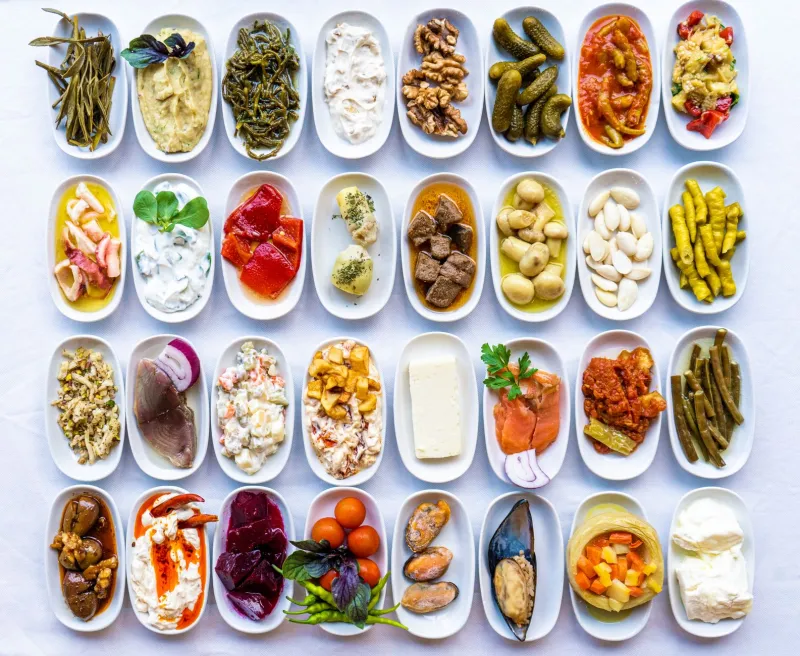
The word itself comes from the Persian maze, meaning taste or snack, but in Turkish culture it carries the weight of an entire social ritual. A proper meze spread — cold plates like tarama and patlıcan salatası alongside hot bites like arnavut ciğeri or midye dolma — isn't designed to be rushed through. It's designed to stretch time. To keep hands busy and mouths talking. To make the table feel abundant without anyone having to perform the exhausting theater of a multi-course dinner.
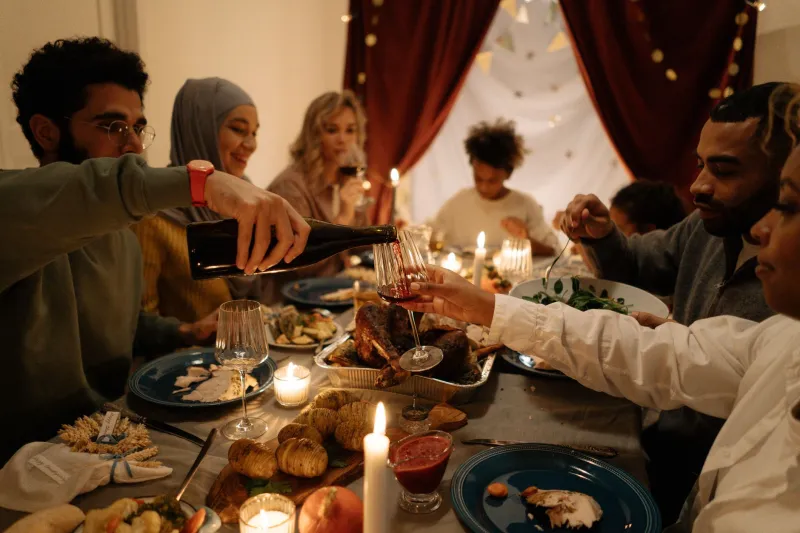
"Meze is hospitality made visible," says Tarık Demirci, who owns a Turkish restaurant in the Williamsburg neighborhood of Brooklyn. "When you put twelve plates on the table for four people, you're telling your guests: there's plenty here. Relax. You're not going anywhere soon."
Tarık opened his restaurant six years ago and says the hardest sell wasn't the food — it was the format. American diners kept asking which dish was "the main." He started training his servers to reframe the experience upfront: tonight, the table is the main.
"Now," he says, "those same customers come back and they bring their friends specifically for the meze. They've converted."
The Dip That Started It All
For many Americans, the gateway into Turkish meze culture has been a familiar one: hummus. Though hummus is more broadly Levantine than specifically Turkish, its explosion in mainstream US grocery stores over the past decade opened the door for related flavors and textures. Once American palates warmed to tahini and chickpea, dishes like haydari (a thick yogurt dip with herbs and garlic) and acılı ezme (a spicy tomato and walnut spread) started making more sense.
Food writer and Turkish-American blogger Aylin Çelik, who runs a recipe column out of Chicago, says she's watched the curiosity grow in real time. "I posted a muhammara recipe three years ago and it got maybe two hundred views. I posted it again last year and it went viral. People are ready for these flavors now. They're not intimidated anymore."
Aylin attributes part of this shift to the broader "small plates" trend that swept American restaurant culture — the tapas wave, the dim sum renaissance, the charcuterie board obsession. Americans have slowly been learning to eat laterally rather than linearly. Meze fits right into that evolving appetite.
Slowness as a Selling Point
Here's the thing about meze that doesn't show up on any menu description: it forces you to slow down. There's no single plated entrée to demolish in fifteen minutes so you can signal the server for the check. The food just keeps arriving, or it sits there in its little dishes, patient and inviting.
In a culture that has elevated speed — fast casual, delivery apps, meal prep — that slowness is becoming a genuine selling point for a certain kind of diner.
"I think Americans are exhausted by efficiency," says Dr. Merve Aydın, a food anthropologist at a New York university who studies immigrant food traditions. "There's a real hunger — no pun intended — for meals that feel like events rather than transactions. Turkish meze offers exactly that. It's structured leisure."
She points to the concept of sohbet — roughly translated as conversation or good talk — which is inseparable from the meze experience in Turkish culture. The food isn't the point. The food enables the point. The point is the people at the table.
Bringing It Home
Restaurants are one thing, but the real cultural transmission happens in living rooms. Turkish-American families across the US have long set out meze spreads for guests almost reflexively — it's just what you do when people come over. Now, those guests are going home and recreating versions of what they experienced.
Selin, back in Austin, says she's been asked for her haydari recipe so many times she's lost count. She's started hosting what she half-jokingly calls "meze nights" — informal gatherings where everyone brings a small dish and the evening unfolds from there.
"It's become my favorite way to entertain," she says. "Nobody's stressed about one dish being perfect. There's always enough food. And the conversations that happen when people are grazing together for three hours — those are the good ones."
That might be the most Turkish thing about meze: it doesn't try to impress. It tries to connect. And in an American food scene that's slowly rediscovering the radical act of sitting down together, that's exactly the energy the table needs right now.