From Nana's Kitchen to a Real Business: How Turkish-American Women Are Cashing In on What They Always Knew
For most of her life, Fatma Arslan's kitchen in suburban New Jersey was just... her kitchen. A place where she spent Sunday mornings rolling börek dough thin enough to read through, where her daughters watched and half-paid attention, where neighbors would show up with empty containers and leave with full ones. Nobody called it a business. Nobody called it anything, really.
Then her granddaughter made a TikTok about it.
"I didn't even know what TikTok was," Fatma laughs. "She filmed me making turşu — the pickles — and the next week I had 200 messages asking where to buy them."
Fatma now ships her fermented vegetable blends to 11 states. She has a cottage food license, a branded label, and a waiting list. She is, by any reasonable definition, an entrepreneur. She just didn't start out trying to be one.
Her story isn't unique. Across the country — from Houston to Chicago to the Turkish-American enclaves of Paterson, New Jersey — women like Fatma are quietly converting intergenerational kitchen knowledge into real income. Food writers and small business observers are starting to call it the "grandma economy," and within Turkish-American communities, it's finding some of its most compelling expressions.
The Knowledge That Was Never Supposed to Be Free
Here's the thing about traditional Turkish food that often gets lost in translation: it's technically demanding. Making proper çekme helva — that pull-apart sesame confection — requires timing, arm strength, and an almost intuitive understanding of temperature that takes years to develop. Laminating baklava dough by hand is a skill that professional pastry chefs train for. Fermenting turşu correctly, without it going wrong, is actual food science wrapped in family tradition.
Turkish-American women have been doing all of this for decades, largely without formal recognition or compensation. The knowledge passed from grandmother to mother to daughter, valued inside the home and mostly invisible outside of it.
What's changed? A few things hit at once. The pandemic pushed a lot of people toward homemade and local food. Instagram and TikTok gave visual, process-driven foods — and the women who make them — a massive platform. And a broader cultural shift started rewarding authenticity over corporate polish. Suddenly, the fact that your recipe came from a village in Anatolia wasn't a quaint detail. It was the whole point.
Instagram Pickles and Cottage Bakery Empires
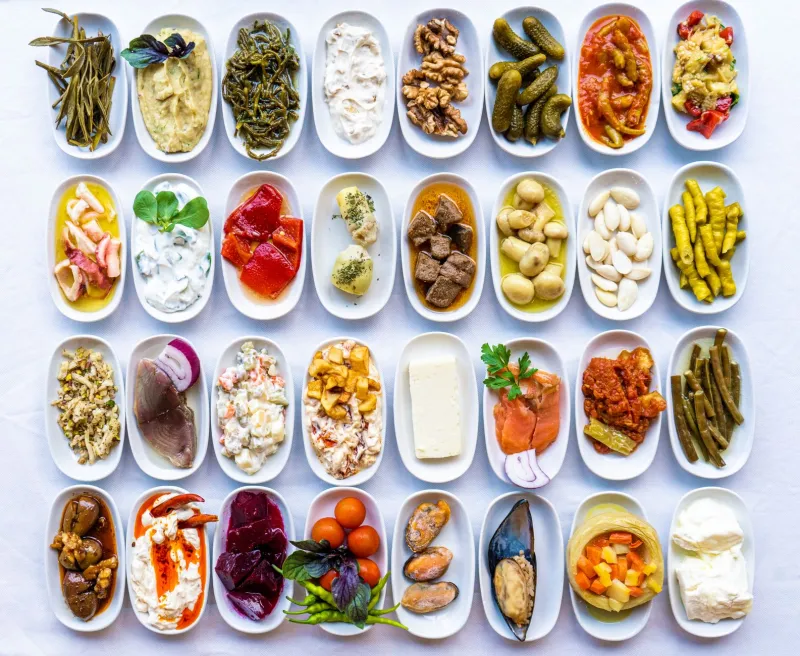
Selin Kaya runs what she cheerfully describes as a "pickle empire" out of her home in the Dallas suburbs. Her Instagram page, which she started mostly to share recipes with family back in Turkey, now has over 40,000 followers. She sells her turşu — brine-fermented vegetables in combinations you won't find at Whole Foods, like green tomato with dill and grape leaves — through a local farmers market and an online shop that sells out within hours of restocking.
"Americans are obsessed with fermented foods right now," she says. "Kombucha, kimchi, sourdough — they understand the concept. But they've never tasted proper Turkish turşu. Once they do, that's it."
A few states over, in the Chicago area, Ayşe Demir has built a cottage bakery operation around sweets that most of her American neighbors had never encountered before becoming her customers. Her baklava — made with real pistachios, clarified butter, and phyllo she stretches herself — has a months-long waitlist for the holiday season. She also makes şekerpare, revani, and a rotating cast of regional specialties that she learns from video calls with her mother in Gaziantep.
"My mother thinks this is hilarious," Ayşe says. "She spent her whole life making these things and never thought of it as anything special. Now I'm charging $45 for a tray of baklava and people are grateful."
More Than Money: What's Really at Stake
It would be easy to frame this purely as a business story — women finding income streams, cottage food laws enabling micro-enterprise, social media democratizing marketing. All of that is true and worth celebrating.
But spend any time talking to the women involved, and something deeper comes up pretty quickly: this is also about cultural preservation, and about making sure certain things don't disappear.
Many of these recipes exist nowhere in written form. They live in the hands and the memory of older women who learned by watching, not by measuring. When those women are gone, the recipes often go with them — or survive in diluted, approximated versions that lose something essential.
Building a business around a recipe forces a kind of documentation. You have to figure out your quantities, your process, your consistency. Selin now has a notebook — the first written record her family has ever kept of her grandmother's turşu formula. Ayşe has photographed every step of her mother's baklava technique during those video calls, creating an archive that her own daughters can access someday.
"I'm not just selling food," Ayşe says simply. "I'm making sure this doesn't get lost."
The Structural Stuff: Cottage Laws, Community, and Getting Paid Fairly
It's worth being honest about the friction points here, because this revolution isn't frictionless. Cottage food laws — which govern what home-based food producers can legally sell — vary wildly by state. Some states are genuinely supportive of small-scale home producers. Others have restrictions that make scaling up difficult or force producers into expensive commercial kitchen rentals before they're ready.
Pricing is another conversation. Turkish-American food entrepreneurs consistently report pressure to underprice their products, often from within their own communities where the expectation of homemade food as a gift — not a purchase — runs deep. Charging $45 for baklava can feel transgressive when you grew up in a culture where baklava was something you brought to the neighbor's house for free.
"The hardest customers to charge are other Turkish people," Ayşe admits with a laugh. "They look at me like I've done something wrong. I have to explain: this is my job now."
Community networks, though, are also a genuine advantage. Turkish-American community groups, cultural associations, and mosque networks have become informal distribution channels and marketing engines for many of these businesses. Word-of-mouth within tight-knit communities moves fast, and a recommendation from someone's teyze carries real weight.
Why This Moment Feels Different
The grandma economy isn't new — women have always monetized domestic skills when necessity demanded it. What feels genuinely different now is the cultural legitimacy attached to it. The food media ecosystem, which once barely acknowledged Turkish cuisine beyond a passing mention of kebabs, is increasingly curious. American food culture's obsession with "authentic" and "heritage" and "small batch" has created real market space for exactly what these women are offering.
And maybe most importantly: younger Turkish-American women are watching. They're seeing their mothers and grandmothers treated not as sweet old ladies who cook a lot, but as skilled producers with valuable knowledge and legitimate businesses. That's a different inheritance than the one being offered to previous generations.
Fatma, back in New Jersey, is already thinking about what comes next. She wants to teach a fermentation class. She's been approached about a local restaurant collaboration. Her granddaughter — the one who made the TikTok — is home from college this summer and has been talking about helping with the business side of things.
"She wants to learn the pickles too," Fatma says. "The real way. Not from a video. From me, in the kitchen."
Some things, it turns out, are worth passing down. Especially when someone finally figures out they're also worth paying for.