Çay, Craft, and Capital: How Turkish-American Founders Are Reshaping the American Dream

Photo: Data: Marc Imhoff/NASA GSFC, Christopher Elvidge/NOAA NGDC; Image: Craig Mayhew and Robert Simmon/NASA GSFC, Public domain, via Wikimedia Commons
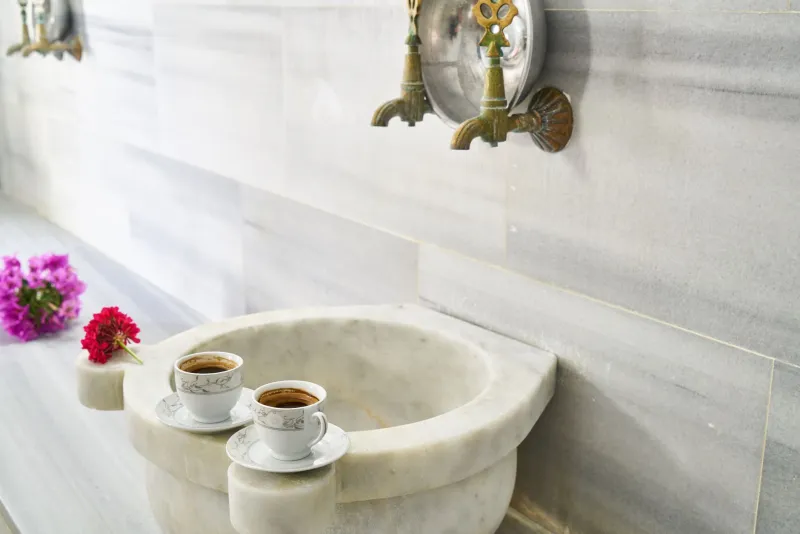
There's a particular kind of patience that comes with watching a pot of çay brew on a double boiler. You can't rush it. The flavor needs time to deepen, the color needs time to settle. Ask almost any Turkish-American entrepreneur about their business philosophy, and odds are they'll reach for exactly that kind of metaphor.
"My father used to say that a business built in a hurry tastes like instant coffee," laughs Emre Yıldız, co-founder of Atelier Bosphorus, a small-batch leather goods studio operating out of a converted warehouse in Philadelphia. "We don't do things the fast way. We do them the right way."
Yıldız is part of a growing wave of Turkish-American founders who are making serious noise across a surprisingly wide range of industries — and doing it on their own terms.
The Values Behind the Venture
What sets many of these entrepreneurs apart isn't just the products they're building or the services they're offering. It's the underlying framework — a set of cultural instincts that often runs counter to the "move fast and break things" ethos that has dominated American startup culture for the past two decades.
Turkish business culture places enormous weight on relationships. There's a concept embedded in everyday Turkish life — esnaf culture — that loosely describes the community of tradespeople and artisans who sustain a neighborhood. The esnaf knows your name. He asks about your family. He remembers that you like your bread a little extra crispy. That relational texture doesn't disappear just because someone relocates to Chicago or Houston.
Nesrin Aktaş, who founded Sofra Supply Co., a direct-to-consumer kitchenware brand based in Austin, Texas, describes it this way: "In Turkey, the person who sells you your copper pot has probably been selling copper pots for three generations. There's a pride in that continuity. I wanted to bring that sense of craft heritage into a modern American context."
Sofra Supply Co. sources its signature hand-hammered cookware from artisans in Gaziantep and pairs each piece with a QR code linking to a short documentary about the maker. It's a detail that feels both deeply Turkish — honoring the craftsperson, not just the craft — and perfectly calibrated for a US consumer base that increasingly wants to know the story behind what they buy.
Dual Identity as a Competitive Edge
For many Turkish-American founders, navigating two cultures isn't a complication — it's a genuine strategic advantage.
Murat Çelik, who built a mid-sized SaaS logistics company in Atlanta after emigrating from Izmir in his early twenties, talks about the way his background shaped his approach to hiring and team-building. "In American startup culture, there's a tendency to optimize for speed and individual performance metrics. What I learned growing up is that a team that eats together, that genuinely knows each other, outperforms a team of brilliant strangers almost every time."
His company hosts a monthly communal lunch — sometimes featuring dishes from his mother's recipes — and has a notably low turnover rate for the industry. He doesn't think that's a coincidence.
This people-first instinct shows up in other ways, too. Several Turkish-American founders interviewed for this piece mentioned a reluctance to pursue aggressive venture capital funding in the early stages, preferring slower, more self-directed growth. "In Turkey, you see a lot of family businesses that have lasted a hundred years," says Aktaş. "That's not an accident. It comes from not over-leveraging, from building something sustainable rather than something spectacular."
Craft Is Making a Comeback — And Turkish Hands Are Part of It
Across American cities, there's been a quiet but unmistakable resurgence of interest in artisanal goods, handmade products, and heritage manufacturing. Turkish-American entrepreneurs are stepping into that space with a distinct authority.
Yıldız's leather studio in Philadelphia now has a six-month waitlist for its signature bags. He employs four craftspeople — two of whom he brought over from Istanbul on skilled worker visas — and runs occasional workshops for locals who want to learn the basics of hand-stitching. "People are hungry for something real," he says. "Something that took time to make. I think that's a very Turkish way of seeing value."
Similar stories are unfolding in the food and beverage space, where Turkish-American founders are moving well beyond the traditional restaurant model. Think specialty spice importers in Portland, small-batch olive oil subscription services in California, and a Brooklyn-based pastry studio that has made künefe — the gloriously gooey cheese-and-pastry dessert — a bona fide brunch menu staple.
Building Community, Not Just Companies
Perhaps the most distinctly Turkish thread running through all of these stories is the emphasis on community-building as an explicit business goal — not just a marketing tactic.
Emre Yıldız hosts a quarterly open-studio evening where local makers, designers, and neighbors can come in, drink çay, and just talk. There's no agenda, no pitch deck. "It started as something I did because it felt natural," he admits. "In Turkey, the workshop is always a place where people gather. It was weird to me that that wasn't already the norm here."
Nesrin Aktaş has partnered with a Turkish cultural association in Austin to host cooking demonstrations that double as community fundraisers. Murat Çelik mentors first-generation immigrant entrepreneurs through a local small business development center.
None of them frame these activities as corporate social responsibility. They frame them as just... how you do business.
What American Entrepreneurship Can Learn
There's something worth pausing on in all of this. At a moment when American consumers are increasingly skeptical of faceless brands, when burnout culture is being openly questioned, and when the hunger for authenticity and human connection feels more acute than ever, the Turkish-American entrepreneurial model starts to look less like a niche cultural footnote and more like a genuinely useful blueprint.
Slower. More relational. Rooted in craft and continuity. Oriented toward community as much as profit.
As Yıldız puts it, leaning back in his workshop chair with the kind of unhurried ease that only comes from knowing exactly what you're doing: "The best businesses are like the best çay. You give them time, you give them attention, and eventually they become something people want to come back to every single day."
Not bad advice, wherever you're building from.