The Keys Came Back With a Catch: What Actually Happens When You Inherit an Apartment in Turkey
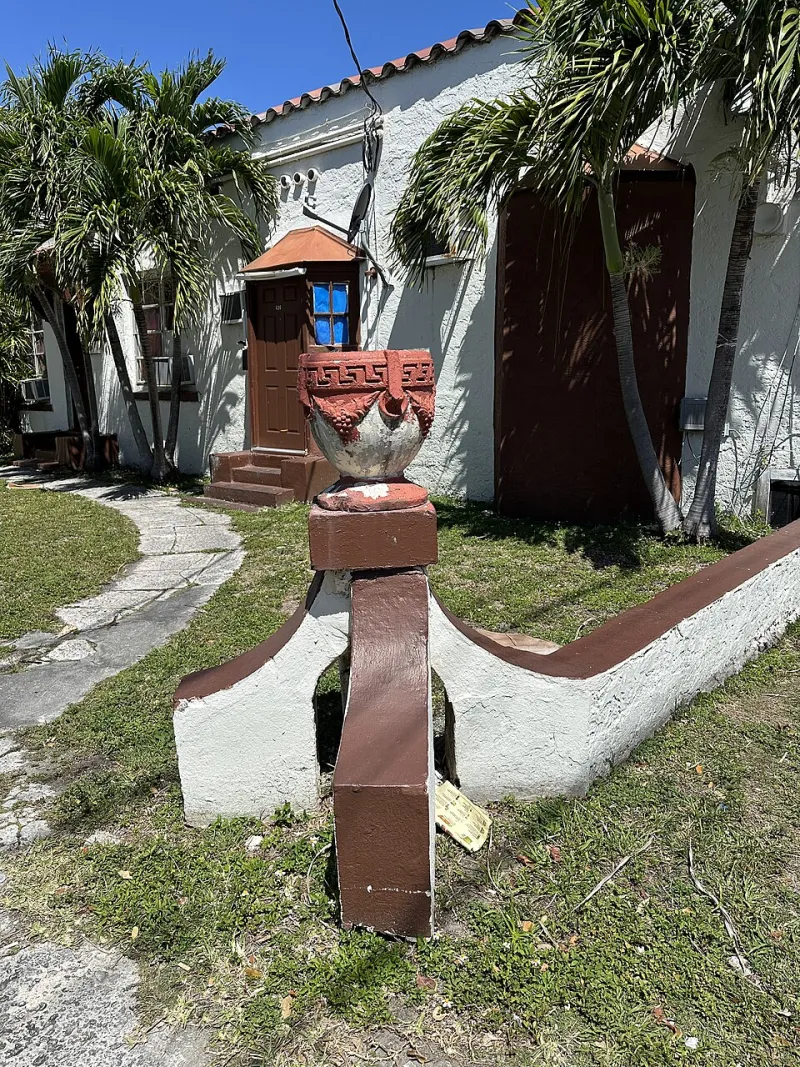
Photo: Phillip Pessar, CC BY 2.0, via Wikimedia Commons
Deniz got the news on a Tuesday afternoon in Chicago, in the middle of a meeting she was already half asleep in. Her father had been gone for four months. The apartment in Antalya had taken almost that long to become officially, legally hers — or rather, one sixth of it.
“I thought it would be like inheriting a car,” she said. “Sign something, get the title, decide what to do. It was not like inheriting a car.”
She is one of many Turkish-Americans now navigating a version of this story. Their parents or grandparents bought in the 1980s and 1990s, often with savings sent home for years, often in coastal towns where an apartment cost less than a used sedan. Those properties are now worth real money, and they come with paperwork, relatives, and opinions.
First, the documents nobody warns you about
The apartment is the easy part. The paperwork is the job.
Heirs need an inheritance certificate in Turkey, and getting one from abroad usually means hiring a lawyer in Turkey to handle the court process, then arranging power of attorney before that. A Turkish tax number is required for nearly everything. Identifying documents need to be current. If the deed has never been transferred, it may still be in a grandparent's name, which means the family is dealing with a chain of inheritances rather than a single one.
Emre, a software engineer in Boston whose family held a flat in Izmir, put it plainly: “I spent more time on apostilles than on grieving.”
A licensed Turkish lawyer is not a luxury in these situations. It is the only practical route for someone who lives 5,000 miles away and cannot afford to discover a missing document in person.
Everyone owns a slice
Here is the part that surprises people most. In Turkey, children have a protected share of a parent's estate. You can write a will, but you cannot simply disinherit your children and leave the apartment to whichever sibling has been nicest about calling.
So the apartment stops being one property. It becomes a list of fractions. Deniz has one sixth. Her brother, who lives in Berlin, has one sixth. Her aunt has one sixth. Three cousins, whom she has met twice, share the rest.
This structure is called hisseli tapu — shared title. In theory it protects everyone. In practice it means that no individual can sell, renovate, or rent out without the others agreeing, and with each generation the list of owners gets longer and the shares get smaller.
“My cousin in Frankfurt owns 0.08 percent of a two-bedroom,” one owner in San Diego said. “She has veto power over my life.”
The nuclear option has a name
When cooperation collapses, Turkish law allows a partition action — the owners apply to the courts to end the shared ownership, and the property is typically sold with the proceeds divided.
People mention this in family conversations the way you might mention a lawyer during Thanksgiving. It works. It also permanently ends whatever goodwill was left, and it can take years. Most families stall in the space just before it, which is why so many apartments in Turkey sit empty for a decade, slowly going shabby while everyone avoids the group chat.
The renovation war
If the family does agree to keep the place, the next argument is about what to do with it.
One faction wants to renovate and rent it out. One faction wants to leave it exactly as it was, because that is the smell of their childhood summers. One faction wants to keep the peach bathroom tile out of respect and the other group would rather have the bathroom out of respect.
There is also a list of costs that nobody budgets for: the building's monthly maintenance fee, property tax, mandatory earthquake insurance, and the fix for whatever has quietly aged for fifteen years. A flat that has not been touched since 2004 in a humid coastal town is going to present a list.
A couple of practical notes from people who have done this. Photograph everything before the first contractor touches it — the 1989 kitchen will be missed by someone later, even if that someone voted for the renovation. Keep all spending and decisions in writing, ideally in a shared folder everyone can see, because memory gets selective when money is involved. And separate the emotional renovation from the structural one. The building's condition is not a debate about anyone's childhood.
Taxes on both sides of the ocean
This is the part with the sharpest edges, and the part where general advice stops being useful.
Rental income in Turkey, potential US reporting obligations, how a foreign tax credit applies, currency conversion — the answers depend heavily on the individual situation. Owners on both sides of this need an accountant who knows the intersection, not one who knows only half of it. Several families interviewed for this piece mentioned discovering a filing requirement a year late, not a catastrophe, but not a good weekend either.
Keep it or sell it
The decision rarely comes down to yield. It comes down to something closer to this: what is this apartment for?
If the family uses it four weeks every summer, it is a vacation home with a large annual bill and a lot of emotional rent. If it is empty, it is a museum with a parking problem. If it rents steadily, it is a business with relatives attached.
Owners who felt good about their choice generally fell into two camps. Those who sold early, before the property became a proxy for unresolved grief. And those who formalized the arrangement — a written agreement, a responsible manager, a schedule, and an agreement not to relitigate it every June.
The ones who felt worst were the ones in between, holding a key and a fraction, neither using the place nor letting it go.
Why it is never just real estate
Because the apartment is not the apartment. It is the sound of the shutters, the neighbor who still asks about your father, the walk to the market where nothing has changed and everything has.
Deniz decided, eventually, to rent her sixth out and keep her summer weeks. It took eleven months and she is not sure she made the right call.
“But I didn't want to be the one who sold it,” she said. “And that's not a financial reason. That's the whole problem, isn't it.”