Forty Layers, One Winner: The Baklava Bracket Taking Over American Cities
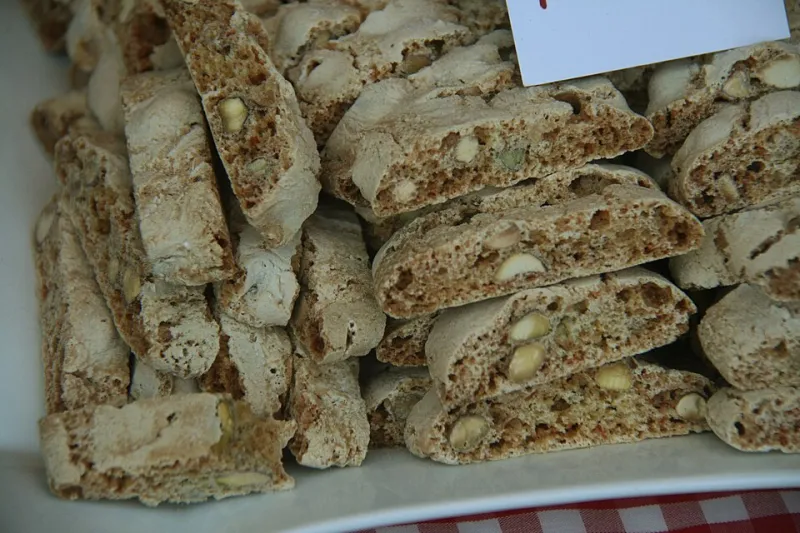
Photo: Tamorlan, CC BY 3.0, via Wikimedia Commons
Every city with a real Turkish footprint eventually produces the same scene: a folding table, a stack of paper plates, a tray of baklava that somebody's aunt drove across two counties to deliver, and a small crowd of people fully prepared to have strong feelings about it.
In the last few years, those scenes have hardened into something closer to a sport. Baklava brackets — half potluck, half tournament, entirely unhinged — have popped up in community centers, mosque fundraisers, church halls, cultural festivals, and at least one auto body shop in New Jersey that clears out the bays every spring. The rules vary. The confidence never does.
Here is what actually goes down when you run one.
Setting the field
A good bracket needs balanced seeding. You want three lanes.
The first is home bakers — grandmothers, sure, but also 34-year-old engineers with laser thermometers and a spreadsheet. The second is commercial: the bakery with the case by the register, plus the one with the very confident Instagram. The third lane is the wildcards — the Greek pastry shop on the corner, the Lebanese caterer who does half the weddings in town, the Syrian bakery that opened two years ago and is already booked out through spring.
The wildcards matter. They keep everyone honest, and they make the semifinals interesting.
Criterion one: the pistachio ratio
This is the first fight, always.
Antep pistachios are the ideal, though most bakers will quietly take what the bulk aisle offers and simply not mention it. The purists argue for roughly one part nut to one and a half parts pastry. The maximalists want a filling so dense it threatens the structural integrity of the tray. The minimalists insist the whole point is the pastry, and the nut is seasoning, not stuffing.
A useful test: tilt a piece. If pistachio rains onto the plate, you are eating a garnish with ambitions.
Criterion two: syrup temperature
The oldest argument in the room, and the one that has ended the fewest friendships only because everyone is too busy chewing.
Hot baklava with cool syrup? Cool tray with warm syrup? Each camp has an aunt who will explain, at length, that the other camp is committing a crime against the family name.
The physics are real. Hot syrup over hot pastry softens the layers all the way through — some call that lush, others call it, quietly, soggy. A cool tray with warm syrup gives you a crisper result that survives to day two. The compromise camp pours warm over warm and lets the whole thing rest overnight, which is probably correct and definitely less fun to argue about.
Criterion three: the bottom layer
This is where amateurs get exposed.
Lift the corner of a piece. If the bottom layers sag, the tray was underbaked. Nobody wants to say it out loud, because the baker is standing right there holding a spatula, but the judges know.
The standard is a bottom you can snap. Not a cracker, not a brick — something with a spine. A properly finished tray makes a small sound when you press it with a finger. Baklava that whispers is baklava that worked.
Criterion four: clarity
Hold a piece toward the window. You should be able to count layers, or at minimum sense them. If it reads as one golden mass, someone rolled the dough too thick — or, more often, bought frozen phyllo and rushed the thaw.
Minor criteria worth scoring: cut geometry (diamonds should be diamonds), edge-to-center consistency, and whether the tray still looks generous at the end of the night instead of collapsing into oil.
The Greek and Middle Eastern problem
Every bracket eventually reaches the same uncomfortable, extremely entertaining semifinal: the Turkish home baker versus the Greek bakery, or the Syrian caterer, or the Lebanese place that has held the same corner since 1989.
Here is the honest, slightly boring truth. Baklava is not owned by any one kitchen. The word, the technique, and the layered-pastry habit itself moved across the eastern Mediterranean and the Middle East for centuries, and every kitchen adapted it to whatever grew nearby. Greeks lean honey and walnut. Turks lean pistachio and sugar syrup. Arab kitchens reach for orange blossom or rose water. None of these is a lesser baklava. Each is a different answer to the same question.
Does that calm the trash talk? Not remotely. Half the pleasure of the bracket is the trash talk. The other half is that after all the shouting, everyone eats everything and someone's uncle declares peace by refilling the tea.
Why baklava is the ultimate Turkish-American flex
There are practical reasons this dessert keeps showing up at office parties, school bake sales, and hospital waiting rooms. It travels well. It needs no reheating. It looks expensive. One tray feeds forty people who will all say “oh, just a small piece” and then come back twice.
But the real reason is quieter. Baklava does the introducing for you. You do not have to explain anything. You set the tray down, someone asks what it is, and for the next twenty minutes you are the person who brought the good thing.
That matters for a generation of Turkish-Americans who spent years translating their food into terms a coworker could file away — “kind of like a croissant,” “sort of a pizza.” Baklava never needed a translator. It just needed a table.
How to run your own
Keep it small: eight entries, three judges, one score sheet. Have every baker label their tray with nut and syrup style. Provide water and unsweetened tea, because after the sixth piece your palate clocks out. Add a “most improved” category so the neighbor who tried for the first time goes home happy instead of devastated.
Then do it again next year. The arguments are the point.