Voice Notes from Nine Time Zones Away: How Turkish-American Families Keep Grandma in the Group Chat

Photo: grandmother video call smartphone family voice notes kitchen, via www.mvrsimulation.com
The family group chat is called Aile. It has forty-seven unread messages, three voice notes from Dede, and a photo of a plate of dolma that no one has claimed. It is 7:12 a.m. in Chicago, which means it is 4:12 p.m. in Istanbul, and somewhere between those numbers a grandmother is holding her phone at arm’s length, squinting at the camera, and asking whether she is on mute. She is not on mute. She is on speaker, which is worse.
For Turkish-American families spread across the U.S. and Turkey, the group chat has become a kind of second living room. It is where birthdays are announced, where doctor’s appointments are discussed, where a cousin’s new apartment is toured via shaky video, and where the small rituals of family life are performed in real time across nine time zones. It is not a perfect substitute for sitting at the same table. But it is not nothing. It is, in many homes, the thing that keeps the table from feeling too empty.
The Group Chat Is the New Living Room
The first thing you notice in these chats is the rhythm. Morning voice notes from the aunt who wakes up early. A photo of breakfast from the cousin who always eats late. A forwarded article about olive oil with no context. A single thumbs-up from the uncle who communicates entirely in emojis. The chat is not a conversation so much as a weather system—constant, low-level, occasionally stormy.
Parents and grandparents in Turkey often use WhatsApp because it is familiar and reliable. Younger relatives in the U.S. might prefer iMessage or Telegram, which means some families run parallel chats and then spend the holidays arguing about which one is official. The platforms change. The impulse does not. People want to know that someone is there.
Dede, You’re on Mute (and That’s Okay)
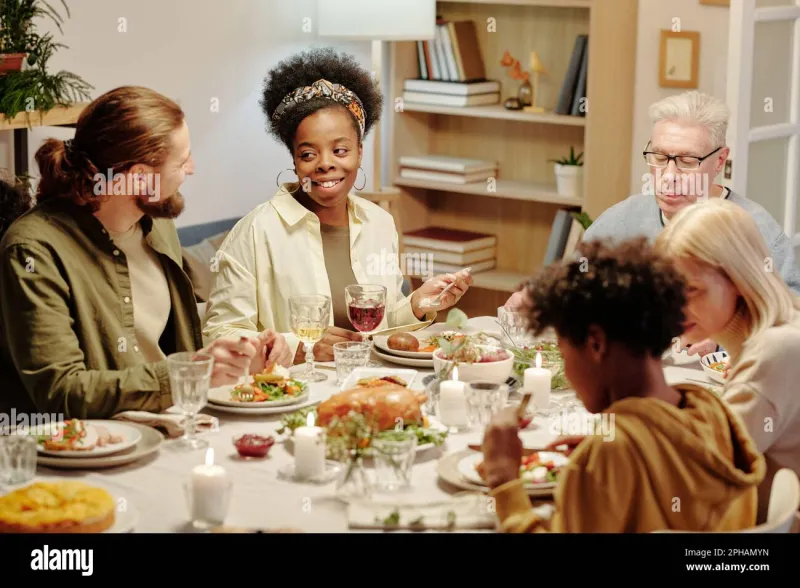
There is a particular genre of Turkish-American family video call: the grandparent who cannot figure out the camera angle, the child who keeps walking in front of the screen, the parent who is cooking while holding the phone, and the relative who joins late and asks what they missed. It is chaos. It is also, often, the closest thing to a family dinner that a Tuesday night can offer.
Grandparents learn the apps in their own way. Some become surprisingly adept at voice notes, sending long, winding messages that begin with a recipe and end with a complaint about the neighbor’s renovation. Others refuse to text and will only answer a call, which means someone in the U.S. has to do the math on time zones and hope for the best. The learning curve is real, but so is the reward: a grandparent who can press and hold a button can suddenly be part of the daily conversation again.
The Kid Who Becomes the Translator
In many mixed-language families, the children become the bridge. They translate the voice notes. They explain why Grandma is asking about the weather in three different ways. They type out replies in Turkish for a parent who is driving. It is a role that can feel heavy, but it can also feel like a superpower. The kid who can move between languages is the kid who knows both sides of the family’s stories.
One of the small tragedies of the digital family is that translation is never perfect. A joke lands differently. A tone gets lost. A voice note that was meant to be tender sounds rushed because the sender was walking. But the effort itself becomes a kind of language. The fact that someone tried to explain, tried to translate, tried to keep the thread going—that is the message underneath the message.
What Voice Notes Can’t Carry
Voice notes are wonderful because they carry voice. You can hear the smile, the sigh, the background noise of the kitchen. But they cannot carry a hug. They cannot carry the smell of a grandmother’s house or the weight of a hand on your shoulder. They cannot replace sitting next to someone at a table and letting the silence do the talking.
That is why the families who do this well treat the digital rituals as a bridge, not a destination. The group chat keeps the connection warm between visits. It is not the visit itself. The goal is not to replace the trip home. The goal is to make the trip home feel less like starting over.
Small Rituals That Hold
The families who feel closest across distance tend to have small, repeatable rituals. A Sunday morning video call. A daily voice note from the same person. A shared photo album for the week’s meals. A cousin who always sends the same ridiculous emoji when someone announces good news. These rituals do not need to be elaborate. They need to be consistent.
One of the most powerful is the simple practice of saying names. In a group chat with thirty people, it is easy to become anonymous. But a voice note that begins with a name—Merhaba, canım, nasılsın?—does something different. It makes the message personal. It turns a broadcast into a conversation.
A Practical Starter Kit for Mixed-Tech Families
If you are trying to keep grandparents close across time zones, start small. Pick one app and make it the family app. Do not introduce three new platforms at once. Record a short voice note instead of typing a long paragraph. Send photos of ordinary things: the table, the garden, the dog, the groceries. Ordinary life is what people miss most.
Be patient with the mute button. Be patient with the camera angle. Be patient with the relative who calls at the wrong time. And when a grandparent sends a voice note that is three minutes long and mostly background noise, listen to the whole thing anyway. Somewhere in there is a recipe, a blessing, or a story you did not know you needed.
The group chat will never be the same as a crowded kitchen. But at 7:12 a.m. in Chicago, with a voice note from Dede playing through the phone, it can feel like the kitchen is not so far away after all.