A Simit in Jersey, a Ferry on the Hudson: The Beautiful Problem of Rebuilding Istanbul in America
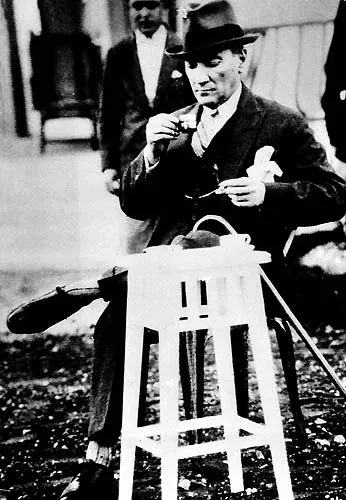
Photo: Unknown authorUnknown author, Public domain, via Wikimedia Commons
There's a bakery in Paterson, New Jersey, where the simit come out at 6 a.m., sesame-crusted and golden, and for about ninety seconds — the time it takes to bite through the crust into the chew of the dough — you could be standing on a corner in Beşiktaş. The Hudson River ferry out of Midtown does its part too: wind in your face, gulls angling for your sandwich, a skyline sliding past. It is not the Bosphorus. But at dusk, squinting, with a çay in a to-go cup, it makes an argument.
Turkish-Americans have become masters of this illusion, and lately, they've industrialized it.
The Architecture of Longing
Los Angeles has its Turkish tea gardens — low stools, tulip glasses, backgammon boards clicking — tucked into strip malls in Westwood and beyond. Houston has grocery stores where the olives are displayed like jewelry. Chicago has cafés where the menu is a love letter: menemen at all hours, kunefe pulled sizzling from the oven. Each one is a replica built from homesickness, and each one is doing brisk business with customers who have never set foot in Turkey at all.
That last part is the twist. These spaces started as comfort for the displaced; they've become destinations for the curious. The Turkish-American who goes for nostalgia now shares a table with an American who went to Istanbul once in 2019 and never got over it.
Comfort or Trap?
Here's where I'll say the quiet part: there's a version of this that's healthy, and a version that's a holding pattern.
The healthy version is obvious. Immigrants have always recreated home — it's how every American neighborhood you love was built. The Turkish tea garden is this century's answer to the Italian espresso bar and the Mexican panadería. It's an anchor. It's where your kids hear the language, where you find a plumber who understands your mother-in-law, where the word "community" stops being abstract.
The trap is subtler. It's the expat who spends every weekend inside the replica — same café, same crowd, same conversations about how much cheaper everything was in Istanbul — and after fifteen years still describes America as a place they live rather than a place they live in. The replica can become a moat. You build Istanbul around yourself so carefully that you never notice Detroit, or Houston, or wherever you actually are, waiting to be known.
A friend of mine, twenty years in New Jersey, put it perfectly over tea last month: "I stopped trying to import Turkey the year I joined the local volunteer fire department's cookout. Now I bring baklava to them. That's when it clicked — I'm not Turkish living in America. I'm the Turkish guy of America. Different job. Better job."
The Ferry Test
So here's a simple test for the homesick. Take the ferry, eat the simit, drink the çay — but then get off the boat. Learn the name of the tree on your street. Know which diner is open at 3 a.m. Have one American friend who isn't from the community. Let the replica be a room in your life, not the whole house.
The Bosphorus, it turns out, is a state of mind — but a state of mind is not an address. The Turkish-Americans doing this best aren't choosing between the two worlds. They're the ferry itself: going back and forth, carrying things in both directions, docked on both sides.
The simit in Jersey is good. The life around it can be too — if you let it.