One Weekend, Two Ceremonies, Zero Regrets: The New Turkish-American Wedding Marathon
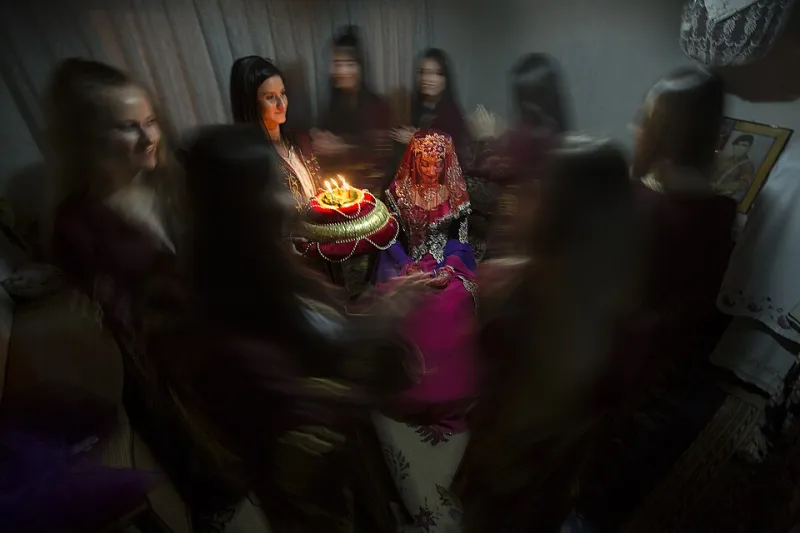
Photo: Aygulharmanci, CC BY-SA 4.0, via Wikimedia Commons
Somewhere between the kına night and the Sunday brunch, the modern Turkish-American wedding was invented. It is not exactly a Turkish wedding. It is not exactly an American one. It is a three-day event with two families, three outfits, at least one emotional meltdown, and a dance floor that somehow solves everything.
The kına night—the traditional henna ceremony—usually happens on Friday. The rehearsal dinner, if there is one, might be Thursday or Friday. The wedding is Saturday. The after-party is Saturday night. The brunch is Sunday. By Monday, everyone is exhausted, slightly hoarse, and already arguing about whose turn it is to host the next one. This is the new normal for many Turkish-American couples, and it is equal parts beautiful, chaotic, and expensive.
First, Admit It’s a Three-Day Event
The biggest mistake couples make is pretending this is a one-day wedding. It is not. The moment you invite both families, the weekend expands. Aunts and uncles fly in from out of state. Grandparents need rides. Cousins need a place to stay. Someone wants to host a dinner the night before, and someone else wants to organize a post-wedding breakfast. If you plan for a single ceremony, you will spend the whole weekend feeling behind schedule.
Plan for the marathon. Build in downtime. Do not schedule a 9 a.m. brunch the morning after an after-party that ended at 2 a.m. Give people space to nap, change clothes, and recover. The wedding is not a sprint. It is a family reunion with a ceremony in the middle.
The Kına Night Is Not a Rehearsal Dinner With Henna
The kına night is often the most emotionally charged part of the weekend. It is the henna ceremony, traditionally a night for the bride’s family and close friends, but in Turkish-American weddings it can become a full-family event. There is music, dancing, crying, and a lot of gold. The bride wears red or a special costume. The henna is mixed and applied to the palm. The older women sing songs that make everyone cry, and the younger cousins film it all for social media.
What makes it tricky is that it can overlap with the American rehearsal dinner. Some couples combine them. Some keep them separate. The key is to be clear about expectations. If you are inviting American relatives who have never been to a kına night, tell them what to expect. If you are inviting Turkish relatives to a rehearsal dinner, explain that it is not a second wedding. The worst thing you can do is let people guess.
Guest Lists: The Great Aunt Problem
Turkish weddings are often large. American weddings are often curated. When you combine the two, the guest list becomes a diplomatic negotiation. There is the great aunt who must be invited. There is the coworker who might be offended if she is not. There is the cousin who has not spoken to the family in years but suddenly wants to come. There is the American friend who asks if they can bring a plus-one, and the Turkish relative who assumes everyone is invited.
The solution is not to make everyone happy. It is to make the rules clear early. Decide on a number. Decide on a cutoff. Explain it to both families in the same language, preferably at the same time. If you are paying for the wedding yourself, say so. If your parents are contributing, ask them what their expectations are before you book the venue. The great aunt problem is real, but it is manageable if you do not pretend it does not exist.
Budget: Where the Money Actually Goes
Turkish-American couples often spend more than they planned, not because they are extravagant, but because the weekend has more moving parts. There is the kına night venue, the rehearsal dinner, the wedding venue, the after-party, and the brunch. There are the outfits, the henna, the gold, the flowers, the music, and the food. There is also the cost of keeping everyone fed and caffeinated for three days.
A few practical moves can help. Choose one event to be the big production and keep the others simpler. Let family members host the welcome dinner or the brunch if they offer. Do not try to replicate a Turkish wedding exactly if you are working with an American budget. The goal is not to recreate the old country. The goal is to create something that feels like both families.
The Dance Floor Is the Diplomat
If there is one place where the two cultures always find each other, it is the dance floor. Turkish music brings everyone to their feet—the aunts, the uncles, the cousins, the American friends who have no idea what the steps are but are willing to try. The American DJ plays a pop song, and suddenly the Turkish grandmothers are watching the young people with a mix of confusion and delight. Then someone requests a Turkish song again, and the circle reforms.
The dance floor is where the negotiations end. No one is arguing about the guest list when the music is loud. No one is worried about the budget when the bride is dancing with her father and her uncle at the same time. The dance floor does not solve every problem, but it gives everyone a break from the problems. That is worth something.
What Works (and What to Let Go)
The wedding weekends that work best are the ones where the couple decides what matters and lets go of the rest. Maybe the kına night is small and the wedding is large. Maybe the rehearsal dinner is a casual barbecue. Maybe the brunch is at a diner instead of a hotel ballroom. The details are less important than the feeling: two families, one long weekend, and a lot of love.
Let go of the idea that you have to do everything. Let go of the perfect photo. Let go of the relative who complains about the music. Let go of the pressure to make the weekend look like a magazine spread. What you will remember is not the centerpieces. You will remember the moment your grandmother cried during the henna ceremony, the moment your American friends tried to dance halay, and the moment the last guest left the after-party and someone said, we should do this again.
The Turkish-American wedding weekend is long. It is loud. It is expensive. It is also one of the most beautiful ways to bring two families into one room. So build in the nap. Book the brunch. And save a dance for the great aunt.