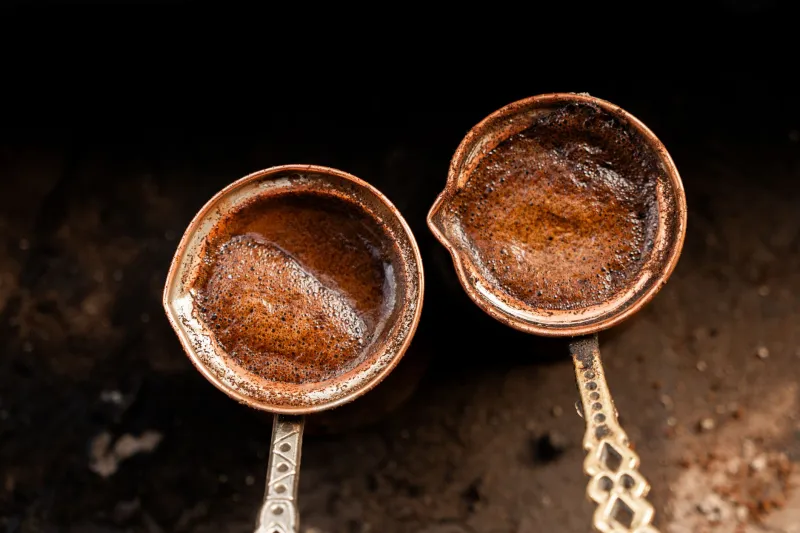
Bayram Lights and Thanksgiving Pies: Inside the Wonderfully Messy Holiday Lives of Turkish-American Families
Two Calendars, One Family
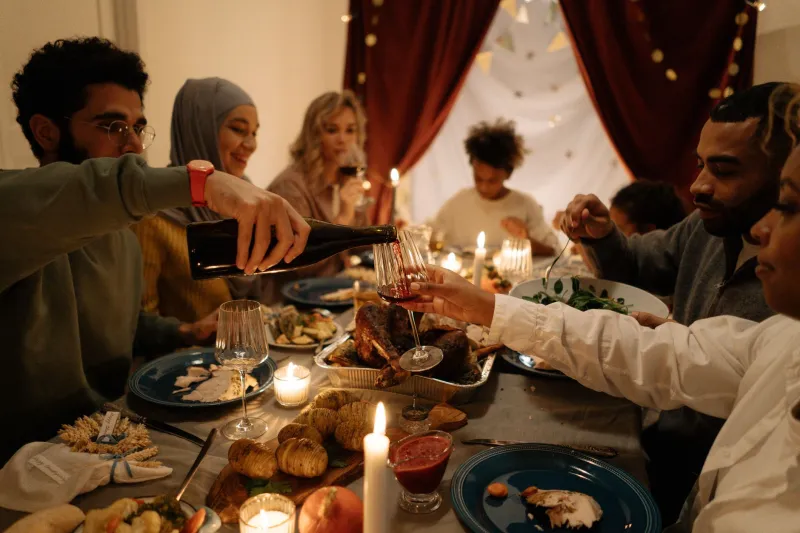
Somewhere in New Jersey, a dining room table is set with both a slow-cooked lamb dish and a Costco pumpkin pie. The kids are arguing over who gets the wishbone. Their grandmother is watching from the couch, a small glass of çay in her hand, mildly baffled by the giant inflatable turkey on the neighbor's lawn.
This is the Turkish-American holiday experience — and it is wonderfully, chaotically its own thing.
For families navigating Turkish Muslim heritage alongside full immersion in American life, the holiday calendar can feel like a scheduling puzzle with no clean solution. Ramadan shifts earlier each year. Eid al-Fitr — known in Turkish as Ramazan Bayramı — doesn't land on a federal holiday. Schools don't close for Kurban Bayramı. And yet Thanksgiving, Christmas, and Fourth of July arrive like clockwork, loud and decorated and very much expected.
Rather than treating these two worlds as competing demands, a growing number of Turkish-American families — particularly those in the second generation — are doing something more interesting. They're merging them.
The Iftar Table Gets an Upgrade
Iftar, the meal that breaks the Ramadan fast at sunset, is already one of the most communal and generous expressions of Turkish food culture. Traditionally, it begins with dates and water, followed by a full spread — mercimek çorbası (lentil soup), börek, pilav, grilled meats, and a parade of sweets.
But in American Turkish households, iftar has started absorbing some local flavor — literally.
"We started doing a big iftar potluck maybe six years ago," says Defne, who grew up in a Turkish family in the Dallas suburbs and now hosts the gathering for her extended friend group. "Half the people are Turkish, but we also have Syrian neighbors, some American friends who are curious, a couple of Pakistani coworkers. So now the table has hummus and cornbread and someone always brings macaroni and cheese."
She pauses. "My mom was horrified the first year. Now she requests the mac and cheese."
This kind of hybrid iftar — rooted in Turkish tradition but open to American potluck energy — has become a quiet community-builder in cities with dispersed Turkish populations. It keeps the spiritual and cultural core of Ramadan intact while making it accessible to people outside the tradition.
Bayram Envelopes Meet Birthday Party Energy
Bayram — specifically Eid al-Fitr, which marks the end of Ramadan — is traditionally a time for visiting family, dressing children in new clothes, and giving bayramlık: gifts of money, sweets, or small presents. Elders offer blessings; children kiss hands and receive envelopes.
For Turkish-American kids growing up alongside Christmas and Hanukkah gift culture, Bayram can sometimes feel like the quieter holiday — less spectacle, less stuff. Some families have responded by leaning into the celebration more deliberately.
"We started doing a full Bayram morning with decorations, a big breakfast spread, and the envelope tradition, but we also let the kids pick one activity they want to do that day," explains Tarık, a second-generation Turkish-American father in Seattle. "Last year they wanted to go bowling. So we went bowling in our nice Bayram clothes. My mom called it chaos. I called it ours."
Other families have introduced gift exchanges alongside the traditional money envelopes, or created Bayram morning playlists that mix Turkish folk songs with whatever the kids are currently obsessed with. The throughline is intention — making sure Bayram feels like an event, not just a day off.
Kurban Bayramı in the American Suburbs
Kurban Bayramı — the Feast of Sacrifice — presents a different kind of logistical challenge in the U.S. The tradition of sacrificing an animal and distributing the meat to family, neighbors, and those in need doesn't translate easily to suburban American life.
Many Turkish-American families have found workarounds that preserve the spirit of the holiday. Some donate to organizations that perform the sacrifice on their behalf in countries where it's more feasible. Others organize large community dinners through local mosques or cultural associations, where the communal aspect of the feast is honored even if the logistics look different.
"We always do a big lamb dinner at home," says Neslihan, who lives in suburban Chicago. "My husband and his brother handle the cooking — it takes all day. We invite everyone we know. It's become the event our American friends actually look forward to most. They don't know the religious context deeply, but they know it means good food and good company."
That's not a dilution of tradition. That's hospitality doing its job.
The December Dilemma (And Why It's Actually Fine)
For Turkish-American families who are secular or who have non-Turkish partners, December can feel like the most complicated month. Christmas is everywhere — in the stores, at school, at the office. Some families opt in fully. Others create a parallel December celebration that centers Turkish winter traditions like yılbaşı (New Year's Eve), which in Turkey is celebrated with considerable enthusiasm, gift-giving, and a decorated tree that looks remarkably Christmas-adjacent.
"We do a yılbaşı tree," says one Turkish-American mom in Brooklyn who preferred to stay anonymous. "Technically it's a New Year's tree. The kids know the difference. Their teachers do not, and we've decided that's okay."
The humor is real, but so is the underlying navigation. These families aren't confused about who they are — they're fluent in both cultures and choosing how to move between them on their own terms.
What the Second Generation Is Actually Building
What emerges from all of these stories isn't a compromise. It's a culture of its own — one that didn't exist a generation ago and that Turkish grandparents sometimes struggle to recognize, but that is unmistakably rooted in Turkish values: hospitality, family, generosity, food as love.
The kids growing up in these households will carry something distinct into adulthood. They'll know how to set an iftar table and how to bring a dish to a Thanksgiving potluck. They'll receive bayramlık envelopes and help decorate a yılbaşı tree. They'll grow up understanding that identity isn't a fixed address — it's a living thing, built year by year, meal by meal, tradition by tradition.
And somewhere, a grandmother is watching all of it from the couch, çay in hand, quietly proud even if she'd never admit it.