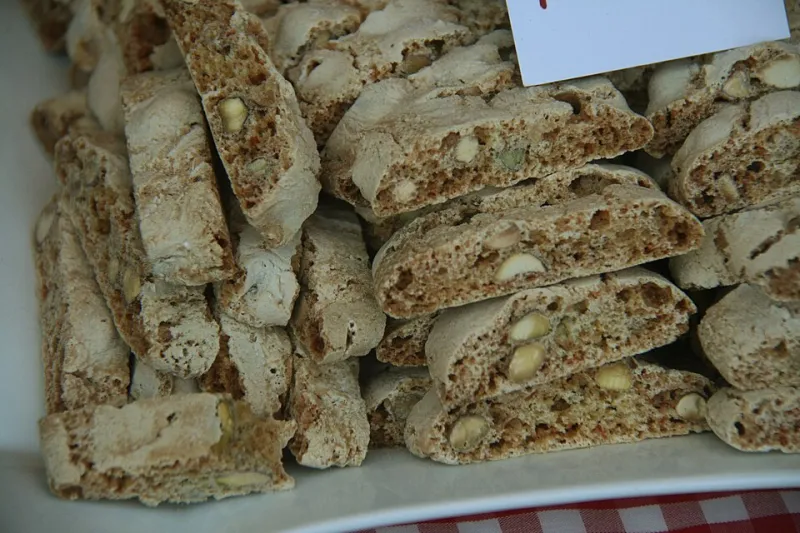
Everybody Brings a Dish, Somebody Leaves With the Pot: How Altın Günü Became Turkish America's Favorite Financial Institution
Photo: Robert Avalon, Unknown, CC BY 3.0, via Wikimedia Commons
Somewhere this month, in a suburban living room with beige carpet and very good pastry, a group of people will sit in a circle, eat for ninety minutes, hand one person a stack of money, and go home. Next month they'll do it again, with someone else's name on the pot.
That's altın günü, literally 'gold day,' the rotating savings circle that Turkish women have been running for longer than most of the people in this country have been alive. The mechanics are simple and ancient: everyone contributes the same amount, everyone takes a turn collecting the whole pot, and nobody charges interest because nobody is a bank.
The Money, Plainly
Here's how it math out. Say eight people each put in $300 a month. Each month, one person takes the full $2,400. Over eight months, everyone pays $2,400 and everyone receives $2,400. It's a zero-interest loan you make to your friends, and a zero-interest loan they make to you.
What you get, if you take your turn early, is an interest-free loan for a down payment, a car, a deposit on a storefront, a grown child's wedding. What you get, if you take your turn late, is eight months of forced savings you could not have pulled off on your own. What everyone gets the entire time is a reason to see each other.
The order of turns is the only thing anyone ever argues about. Some circles draw straws. Some go alphabetically. Some assign turns by need — the person with a closing date gets August. The best-run groups now write the order down at the first meeting, photograph it, and drop it in a group chat that never gets deleted.
The Food Is Not Optional
The pastry matters more than anyone admits. Altın günü is a food event with a financial instrument attached, not the other way around. The host is expected to make something she's proud of. The guests compete, affectionately, over who brings the best börek, the most convincing revani, the sarma that holds together on the plate. A salad is acceptable. A store-bought cake is a conversation.
This is also, incidentally, why the format transfers so well. The savings circle is easy to explain in one text message. The potluck is not a hard sell. Nobody has to commit to a club with a reading list.
Venmo Ruins It and Saves It
The single biggest change in the last few years is that fewer people are carrying $300 in cash to a Tuesday night gathering in a culture where the host will fight you at the door over whether you're allowed to help clean up.
The group chats now do the collecting. Some circles use a shared note plus Venmo, others use a spreadsheet with a tab per contributor, and at least one group in Texas has a designated treasurer who sends the same numbered reminder on the first of every month with a level of administrative polish that would make a credit union envious.
What got lost in that transition is the ceremony of the envelope — the small ritual of handing someone cash and making eye contact. Several longtime organizers said they miss it. Most of them also admitted they'd never go back.
When It Goes Sideways
Here is the unromantic part, and it deserves to be said: this arrangement is built on trust, not on paper. Group savings circles are a friendship-grade instrument, and when they fail they fail loudly. Someone moves to another state. Someone loses a job and quietly skips two months. Someone brings a friend who isn't fully vetted and now the circle includes a stranger with a mortgage.
Most groups handle this by being boring about it. New members are vouched for by someone who has known them for years. The contribution amount is set to what the lowest earner in the room can comfortably pay — $100 is not too small. If someone has to drop out, the circle agrees in advance how that gets unwound rather than discovering a policy mid-crisis.
And a word for anyone thinking about scale: an informal circle among friends is one thing; running a lending operation with strangers is another. Keep it personal, keep it small, keep the amounts survivable.
The Charter, Because Someone Always Wants One
The 2026 version of altın günü comes with house rules, and the house rules are mostly about tone. The most common line items:
Food is potluck unless the host says otherwise. Phones go face down during the money handoff. Whatever is said in the circle stays in the circle — the 'no gossip' clause, which every group claims to enforce and no group has ever perfectly enforced. Sick kids and last-minute cancellations are fine, but tell the treasurer. And the host of the month gets to choose the date, within reason.
One group in Southern California added a rule that has since been copied by at least three others: the last ten minutes of every meeting are reserved for whatever anyone needs to say out loud — a job lead, a sick parent, a visa question, a kid who needs a tutor. It started as a way to stop side conversations. It became the actual point.
Better Than a Book Club, Honestly
Book clubs, in this country, tend to die the way houseplants die in an apartment with no windows: slowly, then all at once, and never because anyone admitted anything. Altın günü has a structural advantage. Everyone has a financial reason to show up, and the person whose turn it is has a very concrete reason to host well.
And the money isn't really the money. The deposit gets saved, the wedding gets paid for, the down payment gets made. But the thing people describe when they talk about altın günü is rarely the pot. It's the woman who drove them to a doctor's appointment in 2009 and is now in the same circle. It's the older member who's been in four of these over thirty years and knows exactly how to shut down a spiraling argument about the pastry.
How to Start One
Pick six to ten people you actually trust. Set a monthly amount everyone can live with. Pick the order in the first meeting and write it down. Designate a treasurer. Decide the food rule. Decide the exit rule. Then host, eat, hand over the money, and do it again next month.
It's not a bank. It's better in the ways that matter and worse in the ways you'd expect. Which is, more or less, the story of every good tradition that made it across the ocean.