Baba, Duyuyor Musun? Turkish-American Men Are Rewriting What It Means to Be a Man
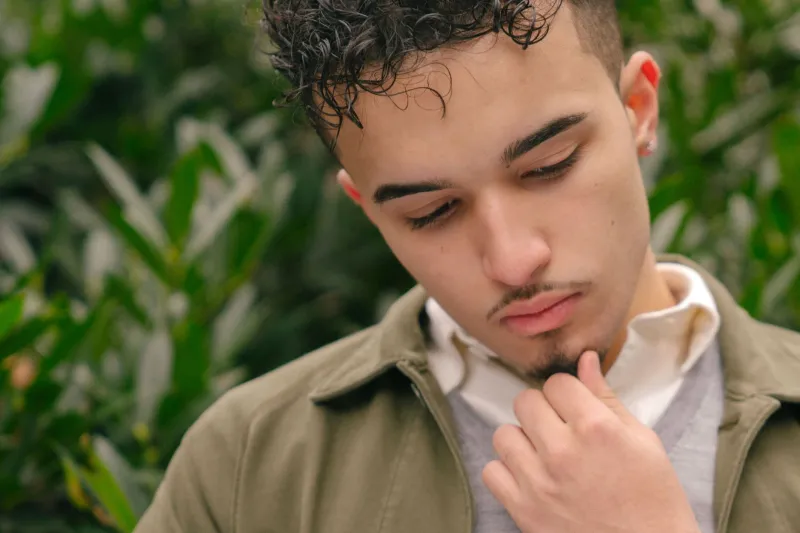
Kaan Demir's TikTok account started as a joke. He'd post little skits about growing up Turkish in New Jersey — the dramatic aunts, the mandatory second helpings, the very specific anxiety of bringing a non-Turkish friend home for the first time. Funny stuff. Relatable stuff, if you knew.
Then one video hit differently. In it, Kaan talked about calling his dad to say he loved him — and his dad not knowing quite what to do with that. The video got 400,000 views. The comments were flooded with Turkish-American guys saying, quietly, same.
"I didn't expect that," Kaan says. "I thought maybe my family was just weird. Turns out we're all in the same weird boat."
That boat is crowded. Across the country, Turkish-American men are navigating a genuinely tricky intersection: the weight of traditional Turkish expectations around masculinity on one side, and an American cultural moment that's asking men to be more emotionally open, more flexible, and more self-aware on the other. The tension is real. But so is the creativity with which they're handling it.
What "Traditional" Actually Means
Let's be careful here, because "traditional Turkish masculinity" is not a monolith. Turkey is a country of 85 million people with enormous regional, class, and generational variation. The stoic, provider-focused, emotionally closed-off patriarch is a real cultural archetype — but so is the Turkish father who cries at every family gathering and fusses over his kids like a mother hen.
"My dad is the toughest guy I know and also the most sentimental," says Tarık, 28, a software engineer in Seattle. "He'll tell you men don't complain and then spend an hour talking about how much he misses his village. The contradiction is the whole thing."
What many Turkish-American men describe is less a rigid code than a set of competing expectations: be strong, provide, protect — but also show up for family, value warmth, and never let guests leave hungry. It's a masculinity that has more emotional texture than the American "tough guy" stereotype, but often lacks a shared language for processing feelings directly.
"We express love through action," explains Mert, 33, a therapist in Chicago who works with Turkish-American clients. "Food, fixing things, showing up. Not necessarily through words. That's not coldness — it's a different emotional dialect. But it can create real gaps when you're living in a culture where verbal emotional expression is the expectation."
TikTok as Cultural Translator
Something interesting has happened as Turkish-American men have entered the broader online conversation about masculinity. They've brought their own flavor to it — and it's landing.
Creators like Kaan are using humor and storytelling to explore themes that get treated with heavy earnestness elsewhere. The result is content that feels lighter but cuts just as deep: videos about wanting to hug your dad but not knowing how, about being told to "be a man" by someone who also wept openly at a soccer match, about trying to raise your own kids differently while still respecting where you came from.
"There's this whole genre of 'Turkish dad' content and it's genuinely beloved," says Zeynep, a digital culture writer who's been tracking the trend. "But the best creators aren't just playing it for laughs. They're using the humor to open a door to something more honest."
The comments sections on these videos are often unexpectedly moving — a mix of Turkish-Americans recognizing themselves, non-Turkish viewers finding universal resonance, and occasionally, older Turkish men cautiously entering the conversation.
The Therapy Question
One of the starkest cultural collisions for Turkish-American men is around mental health. Therapy remains stigmatized in many Turkish communities — seeing a professional is still coded, for some, as weakness or family failure. But American professional and social culture increasingly normalizes it.
"I started therapy at 26 and didn't tell my parents for two years," says Oğuz, 30, a marketing manager in Los Angeles. "When I finally told my mom, she cried — not because she was upset, but because she wished she'd had that option. My dad still doesn't fully get it, but he's not against it either. He just asks if it's 'working.' Which is honestly kind of sweet."
Mert, the therapist, sees this shift in his practice daily. "The younger generation is coming in. They're willing to do the work. What I notice is that they often arrive carrying not just their own stuff, but their fathers' and grandfathers' unprocessed experiences too. Intergenerational patterns are real."
The willingness to name that — publicly, in TikTok comments or in conversations with friends — is itself a form of cultural evolution.
Fatherhood as the Proving Ground
Perhaps nowhere is the shift most visible than in how young Turkish-American men are approaching fatherhood. Many describe a conscious effort to build on what their own fathers gave them while filling in the gaps.
"My dad worked constantly. He sacrificed everything for us and I respect that enormously," says Burak, 35, a father of two in Houston. "But I want my kids to know I'm present. Not just providing. Present. I want them to be able to tell me things."
This isn't a rejection of Turkish values — it's more of a remix. The fierce protectiveness, the deep commitment to family, the hospitality, the work ethic — those stay. What gets renegotiated is the emotional availability, the willingness to say I love you out loud, the permission to be vulnerable without it being a crisis.
"I told my son I was proud of him the other day and he just hugged me," Burak says. "My dad never said that to me. Not because he didn't feel it. He just didn't have the words. I'm trying to give my kids the words."
Neither Here Nor There — And That's Fine
What emerges from talking to Turkish-American men across generations is not a clean narrative of tradition being replaced by progress. It's messier and more interesting than that.
These are men who can be emotionally fluent in English and emotionally reserved in Turkish — and switch between the two depending on who's in the room. Men who understand their fathers' silence as a form of love even as they choose a different form themselves. Men who are deeply proud of where they come from while also being honest about what they want to change.
That negotiation — ongoing, imperfect, sometimes funny and sometimes painful — is exactly what makes their stories worth telling.
Kaan is still posting. His latest video is about teaching himself to cook his grandmother's köfte and calling her on FaceTime to show her. She cried. He cried. He posted it anyway.
Five hundred thousand views. Comments full of Turkish guys saying, quietly, same.
Some things translate perfectly.