Come In, Sit Down, Stay Awhile: The Turkish-American Spaces Putting People Before Profit
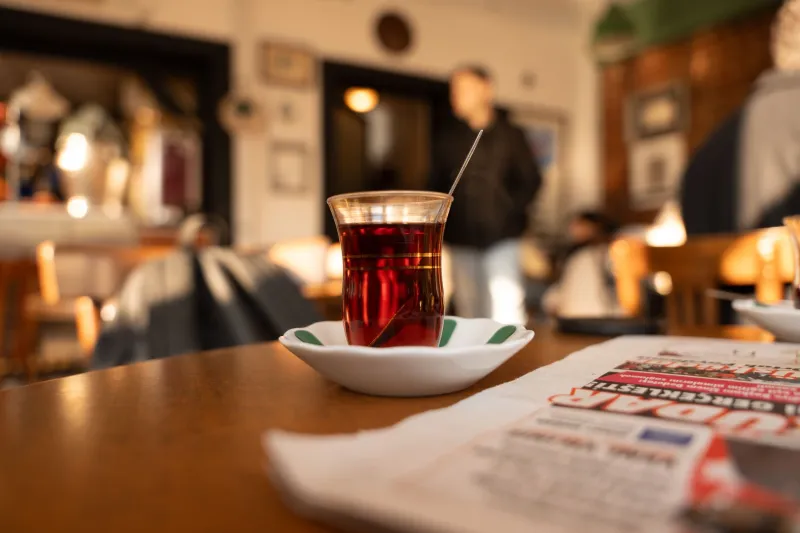
Walk into Nazar Kitap in a quiet stretch of Astoria, Queens, on a Tuesday afternoon and you might find a retired electrician playing backgammon with a college student he met three weeks ago. You'll almost certainly be offered tea before you're offered a receipt. The owner, Tarık, will probably ask your name and remember it the next time you come in.
This is not a growth-hacking strategy. This is something older and, in the context of American retail culture, almost radical.
The Business Model That Doesn't Look Like a Business Model
Across the United States, a quiet but meaningful wave of Turkish-American entrepreneurs is opening spaces that prioritize something the traditional startup playbook tends to treat as secondary: human connection. Bookstores with çay service. Community gardens anchored by Turkish breakfast spreads on weekend mornings. Art galleries that double as language exchange meetups. Workshops where someone's grandmother teaches marbling — ebru — to curious strangers.
These aren't vanity projects. They're functional businesses. But they're being built around a different set of values — ones that have deep roots in Turkish culture and are finding surprisingly fertile ground in American neighborhoods hungry for exactly this kind of thing.
"In Turkey, the concept of misafirperver — real hospitality — isn't a feature. It's the foundation," says Aylin, who opened a textile and tea shop in Portland, Oregon, four years ago. "When I came here, I noticed that people were lonely in ways they didn't even have words for. So I just decided to run my business the way my grandmother ran her home."
What Misafirperver Actually Means
The word translates roughly as "hospitable," but that flattens it. Misafirperver — literally "one who loves guests" — implies an entire orientation toward other people. It means the guest eats before you do. It means you don't let someone leave without offering something. It means the act of welcoming is itself a form of dignity, extended to the person arriving and claimed by the person giving it.
For Turkish-American entrepreneurs, building this into a business isn't a gimmick. It's a cultural inheritance they're choosing to pass forward.
In Denver, Berk runs a small community garden plot that grew — almost accidentally — into a weekly gathering space. What started as his own plot to grow herbs he couldn't find locally became a Saturday morning tradition: neighbors bringing food, someone always making tea, kids running between the beds while adults talked about everything and nothing.
"I never planned a 'community event,'" he says. "I just kept leaving the gate open."
The Economics of Slowness
Here's the honest part: these spaces are not easy to sustain financially. The math on a bookstore that gives away tea doesn't work the same way a coffee chain's math does. A garden that prioritizes gathering over yield isn't optimized for output. An art gallery that hosts free language exchanges isn't monetizing its foot traffic.
But the entrepreneurs running these spaces have thought about this — and many of them have found that the community they build becomes its own economic engine, just not in a way that shows up neatly on a spreadsheet.
Aylin's shop in Portland has a loyal customer base that drives from across the city specifically because of the experience. People buy more when they feel welcomed. They come back. They bring friends. They post about it online not because they were incentivized to, but because they genuinely want to share something that felt rare.
"My most profitable months have always followed the months where I did the most 'non-profitable' things," she says. "A free workshop on natural dyeing. A poetry reading where nobody bought anything. But they came back."
Tarık in Astoria describes it similarly. "People ask me how I compete with Amazon. I say: does Amazon know your name? Does Amazon ask how your mother is doing?"
A Different Kind of American Dream
There's a broader cultural conversation happening here, one that goes beyond Turkish-American identity specifically. Americans — particularly younger ones — are increasingly vocal about wanting "third places": spaces that aren't home and aren't work, where community happens organically. The loneliness epidemic is well-documented. The hunger for genuine belonging is real.
Turkish-American entrepreneurs are, in many cases, building exactly what that gap calls for. And they're doing it from a cultural framework that has always understood community as infrastructure.
In Atlanta, Seda opened a small gallery two years ago that features Turkish and Turkish-American artists alongside local Atlanta creators. On the first Friday of every month, she hosts an open evening — free to attend, tea and simit available, no pitch, no pressure. The gallery sustains itself through sales and occasional commissions, but the open evenings are non-negotiable.
"This is how I was taught to be in the world," she says. "You make space for people. You feed them if you can. You let the relationship build on its own time."
Resistance as a Business Philosophy
Calling this "resistance" might sound dramatic, but there's something genuinely countercultural about choosing slowness, generosity, and relational depth in an economic environment that rewards speed, scale, and frictionless transactions.
These Turkish-American spaces aren't anti-capitalist manifestos. Their owners want to be financially sustainable — they have to be. But they're refusing to let profitability be the only measure of success. They're building businesses that reflect a set of values: that people deserve to be welcomed, that community is worth investing in, that the act of sitting down together over tea is not a waste of time but the whole point.
In a country still figuring out what belonging looks like, that might be the most American thing of all.